

Inspired by the warmth and effortless sophistication of a favorite Hamptons restaurant, Neal-James Stufano and his family transformed their Bronxville kitchen into a space designed for cooking, gathering and everyday life.
Bronxville resident and acclaimed architect Neal-James Stufano shares his approach to designing a high-end kitchen that actually works for real life. We stepped inside his own home to see how he balances flow, proportion, storage, light, materials and art to create a kitchen that's as hardworking as it is beautiful.
At NJ Caine Architecture, Stufano describes the philosophy as livable luxury, creating spaces that feel sophisticated without sacrificing comfort or function. Whether designing a Bronxville residence, Manhattan townhouse or Hamptons estate, he starts not with finishes, but with how people actually live.
Tip 1: Design Around Real Life
Before choosing cabinetry or countertops, I think about what actually happens in the kitchen. Where do the groceries land? Where does coffee happen in the morning? Where does someone prep dinner? Where do family and guests naturally gather?
A kitchen needs a natural choreography. The refrigerator, sink, prep area and cooktop should relate to one another without creating unnecessary steps or traffic jams. And because real kitchens rarely have just one person in them, the plan should allow someone to make coffee, unload the dishwasher or open the refrigerator without getting in the cook's way.
Good design starts by making those everyday movements feel effortless.
Tip 2: Give Everything a Home
The secret to a sophisticated kitchen isn't necessarily more storage, it's better storage.
I like to think specifically about where the things you use every day belong. Coffee should be near the coffee maker. Knives and cutting boards should be close to the prep area. Pots belong near the cooktop. Garbage and recycling should be convenient to both food prep and cleanup.
I often prefer deep drawers to lower cabinets because you can see everything at once. Appliance garages and pantry storage are also useful for keeping coffee machines, toasters and other necessities accessible without leaving everything on display.
Even the less glamorous things, paper towels, cleaning products and recycling, deserve careful planning. Hiding something so well that it's inconvenient defeats the purpose.
““The best kitchen isn’t the one that looks the most expensive. It’s the one that makes everyday life feel effortless.””
Tip 3: Make the Island Earn Its Place
A large island isn't automatically a useful island.
One of the most important things in any kitchen is a real prep area: an uninterrupted stretch of counter where you can comfortably chop, assemble and cook. A huge island that's divided by sinks, cooktops and appliances can actually provide less useful workspace than a smaller, carefully planned one.
The island should also improve circulation rather than become an obstacle. You need enough room around it for doors and drawers to open comfortably and for more than one person to move through the kitchen.
When space allows, I often incorporate a prep sink so two people can work comfortably at the same time. The goal isn't to make the island as big as possible. It's to make every inch useful.
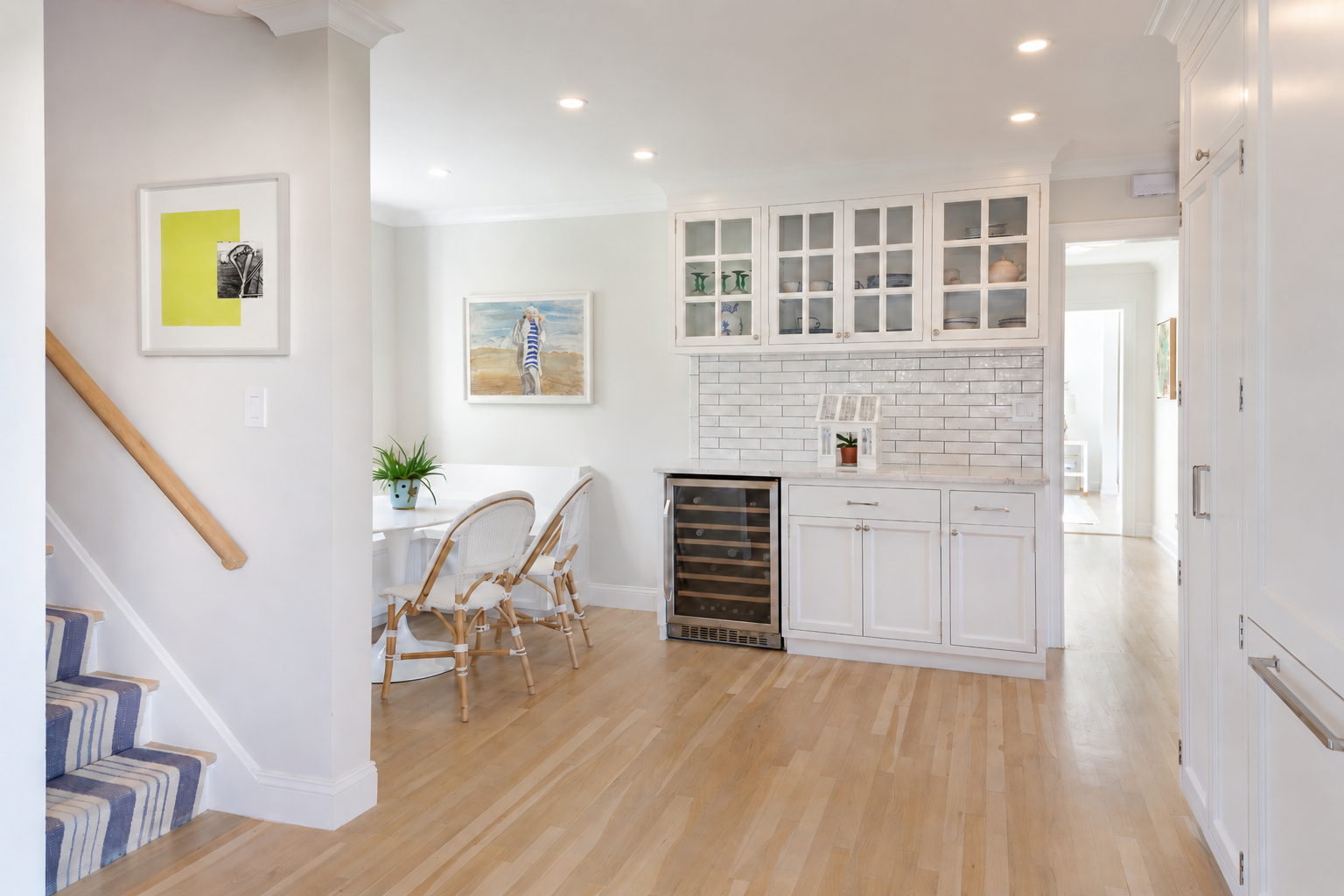
Artwork available from J. Mackey Gallery
Tip 4: Invest in What You Use Every Day
Some of the most important luxuries in a kitchen aren't the most obvious ones.
If you're deciding where to invest, I recommend prioritizing the things you continually touch and use: faucets, cabinet hardware, drawer mechanisms, countertops, lighting and appliances. A beautifully engineered drawer or a faucet that works perfectly contributes to your experience of the kitchen every single day.
Materials matter, too. I prefer materials that can live with you rather than ones that need to remain pristine. Natural stone, wood and metal develop character over time.
Wood is particularly important because kitchens naturally contain so many hard surfaces. Flooring, cabinetry, shelving or furniture can introduce warmth and texture and keep the room from feeling overly polished.
Tip 5: Don't Forget the Art
The kitchen deserves artwork just as much as the living room or dining room.
My wife, Justine McEnerney, owner of J. Mackey Gallery, has always encouraged people to think of the kitchen as a place for collecting and living with art, and I couldn't agree more.
Art brings personality, color and permanence to a room that's often designed primarily around function. Works on paper under museum glass and properly framed prints can work particularly well, allowing art to become part of everyday life while remaining protected. Ultimately, your kitchen shouldn't feel like a showroom. It should feel personal, comfortable and completely connected to the way you live.
As seen in Bronxville Living Magazine
